

Football isn’t just about raw talent—it’s about deliberate practice, smart training, and consistent effort. Whether you’re dreaming of going pro or simply want to dominate your local league, improvement comes down to mastering the fundamentals and pushing your limits every single day.
If you’re serious about taking your game to the next level, this checklist will give you a clear roadmap. And if you’re looking for world-class facilities to put these methods into practice, Koh Samui Football training at Maraleina Sports Resort offers the perfect environment—FIFA-standard pitches, pro-level coaching, and state-of-the-art equipment all in a stunning tropical setting.
1. Perfect Your First Touch (Ball Control)
Your first touch can make or break an attacking opportunity. The best players in the world make it look effortless because they’ve trained this skill thousands of times until it becomes second nature.
Start with wall passes: kick the ball against a wall and practice receiving it with different parts of your foot—inside, outside, laces. Vary the height and speed. Work on cushioning the ball so it stays close to your body, ready for your next move. Spend 15-20 minutes daily on touch drills using both feet. The goal is to develop such refined ball control that you can receive any pass, in any situation, and immediately be ready for your next action.
2. Practice Passing with Both Feet
One-footed players are predictable players. If defenders know you can only pass with your dominant foot, they’ll force you onto your weak side every time. Developing genuine two-footedness opens up the entire pitch and makes you exponentially more dangerous.
Set up simple passing drills with cones or a partner. Start with short passes using your weaker foot, focusing on technique—ankle locked, striking through the center of the ball, following through toward your target. The key is intentional practice. Don’t just default to your strong foot during training—deliberately use your weak foot even when it feels uncomfortable.
3. Conquer Cone Dribbling (Agility)
Agility separates good dribblers from great ones. It’s not just about speed—it’s about changing direction explosively, keeping the ball glued to your feet, and manipulating defenders with body feints and quick touches.
Set up cone courses that force you to use both feet, practice tight turns, and change pace. Work on various dribbling techniques: inside-outside touches, step-overs, drag-backs, the Cruyff turn. Don’t just practice the moves—practice them at game speed. Time yourself and race against your personal best. The more realistic your training, the more it translates to match performance.
4. Prioritize Sprint Training and Stamina
Modern football demands incredible physical conditioning. You need explosive speed to beat defenders in one-on-one situations, but you also need the stamina to maintain your performance for 90+ minutes.
For sprint work, focus on short bursts with full recovery—do 20-40 meter sprints, rest completely, then repeat. For endurance, incorporate interval training that mimics football’s stop-start nature. High-intensity intervals followed by active recovery prepare your body for the constant changes of pace in a real match.
5. Build Power with Strength Work (Core & Legs)
Physical strength isn’t just for strikers battling defenders—every position benefits from increased power. Strong legs generate more shot power and longer passes, while a strong core improves balance and helps you shield the ball.
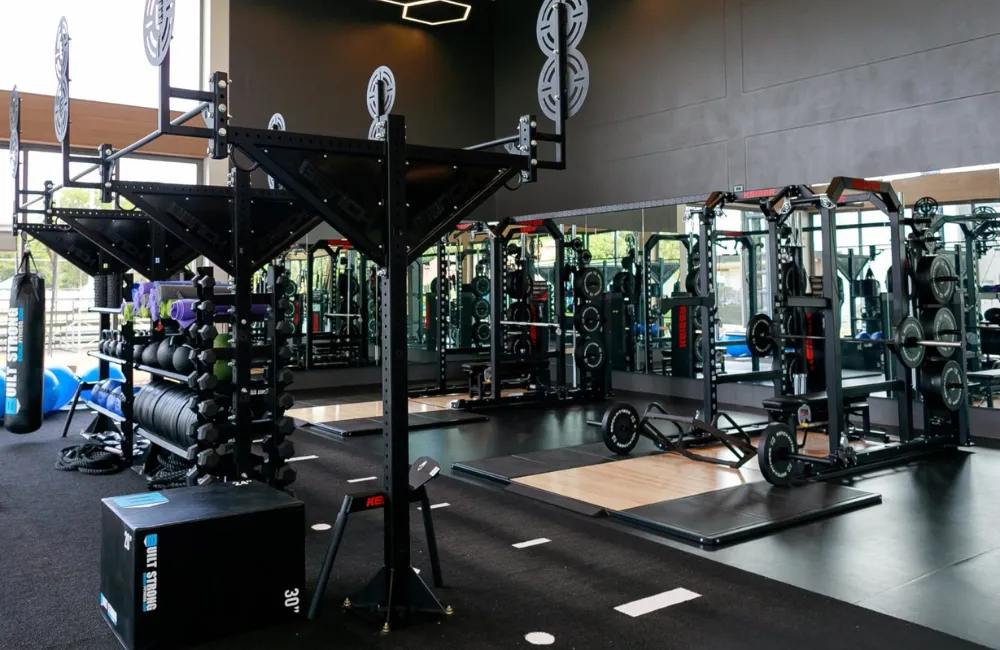
Focus on compound movements: squats, lunges, and various core exercises. You’re building functional strength that translates directly to football performance. The High Performance Center at Maraleina features Keiser pneumatic equipment specifically designed for athletes, allowing you to build explosive power without excessive joint stress.
6. Improve Your Decision-Making and Vision
Technical skills mean nothing if you don’t know when and where to use them. Decision-making and vision separate intelligent players from those who consistently make poor choices.
Watch matches with a critical eye. Notice how top players scan before receiving the ball, always knowing what’s around them. During training, practice with your head up and play small-sided games where limited space forces quick decisions. The more you train your brain to process information rapidly, the more time you’ll seem to have on the ball.
7. Analyze Your Own Game (Self-Assessment)
Self-assessment might be the most underrated tool in player development. Record your matches and training sessions when possible. Watch them critically, as if you’re a coach evaluating a player.
At Maraleina, players receive physical assessments and personalized performance reports as part of programs like Pro Boost. This data-driven approach identifies specific weaknesses and tracks improvement over time, ensuring your training addresses actual deficiencies rather than imagined ones.
8. The 20-Minute Daily Solo Training Rule
Consistency beats intensity when it comes to skill development. A 20-minute daily solo training session will produce more improvement than occasional marathon training days.
Your 20-minute session could rotate focus: Monday—first touch, Tuesday—weak foot passing, Wednesday—dribbling. Keep it simple and focused. All you need is a ball and a small space. Over a year, that’s over 120 hours of extra technical work—while your competitors are sitting on the couch.
9. Commit to Full-Body Recovery (Sleep & Hydration)
Training breaks your body down. Recovery builds it back stronger. Sleep is non-negotiable—aim for 8-9 hours. This is when your body repairs muscle tissue and recharges your nervous system.
Hydration affects everything: energy levels, concentration, and injury prevention. Drink water consistently throughout the day. At Maraleina’s facilities, players have access to ice baths, saunas, and cold plunge pools—professional recovery tools that reduce inflammation and speed up healing between sessions.
10. Study Professional Players in Your Position
The best players in your position have already mastered the skills you’re trying to develop. Watch full matches from a tactical camera angle. Focus on one player for 10-minute segments and notice patterns you hadn’t seen before.
Modern football coaching has evolved to incorporate video analysis at every level. Programs like PSG Academy at Maraleina teach players not just technical skills, but the tactical intelligence that separates professional players from talented amateurs.
Summary
Becoming a better footballer requires focused work on specific skills, intelligent training, and genuine commitment. These 10 proven methods address every aspect of the game: technical ability, physical conditioning, mental sharpness, and professional habits.
At Maraleina Sports Resort on Koh Samui, everything is designed to accelerate player development: FIFA-certified pitches, High Performance training centers, professional coaching from former pros, and comprehensive recovery facilities. Whether you’re joining a PSG Academy session or bringing your team for pre-season training, the world-class infrastructure removes barriers and lets you focus purely on improvement.
Your football journey doesn’t require talent you weren’t born with—it requires commitment to the process and access to the right training environment. Check off these 10 methods consistently, and the player you want to become isn’t just possible—it’s inevitable.

